Buttery Croissant Baking Recipe
Highlighted under: Treats & Temptations
I’ve always been drawn to the flaky, buttery goodness of croissants, but making them at home felt daunting until I tried this recipe. The secret here is about letting the dough rest properly and not rushing the lamination process. Each layer forms beautifully, and the result is a treat that’s perfect for breakfast or an afternoon snack. I love how the warm, buttery aroma fills my kitchen as they bake, making it a delightful time spent at home baking something special.

Making croissants at home is truly a labor of love, and my first attempt was a memorable journey. I learned that patience is key; allowing the dough to rise and rest makes all the difference in texture. I almost discarded my first batch, but once I embraced the process of folding and rolling, I was rewarded with croissants that were flaky and irresistibly buttery.
Each bite of the finished croissants is a celebration of the layers! I also discovered that brushing them with an egg wash before baking creates a beautiful golden finish. It’s a technique that elevates them from homemade to bakery-worthy, making it a fun recipe to share with friends during a cozy brunch.
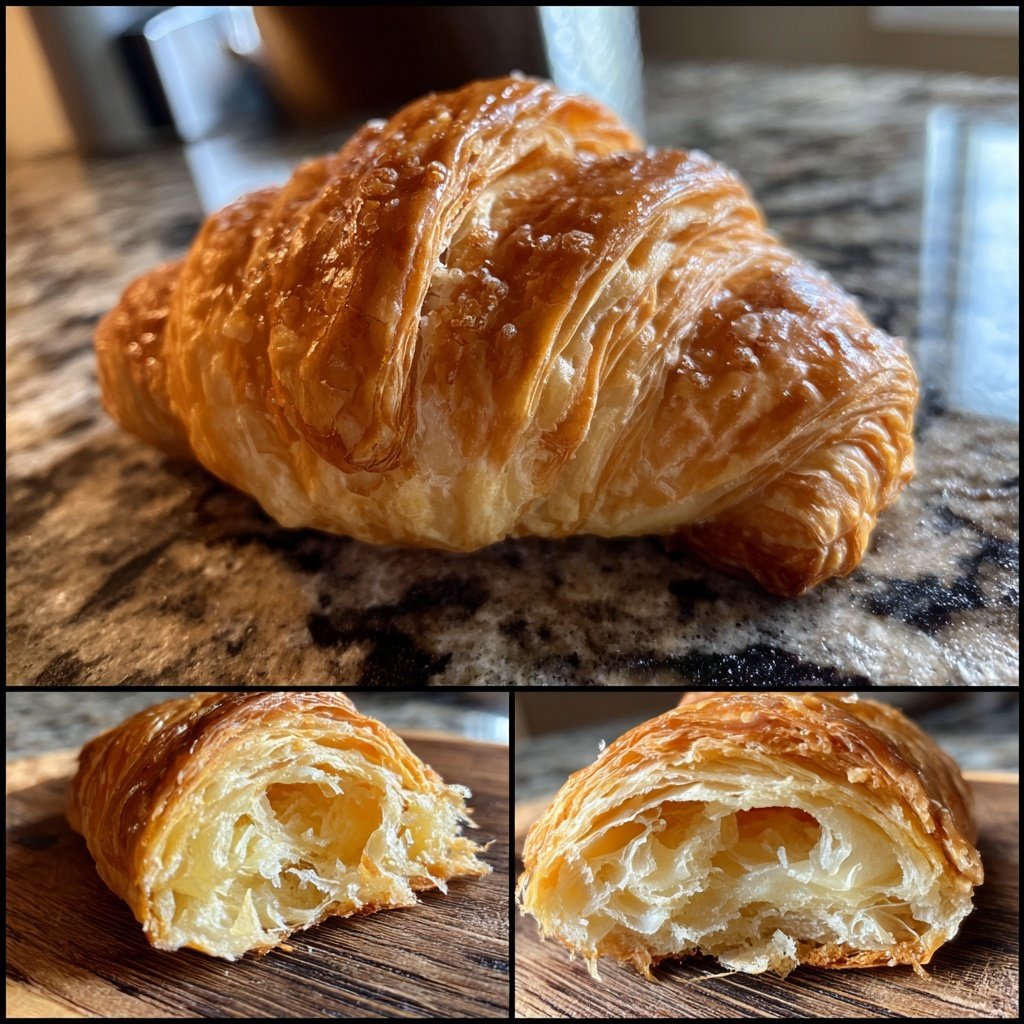
Why You Will Love This Recipe
- Buttery layers that melt in your mouth
- The delightful aroma that fills your kitchen while baking
- A perfect activity for a leisurely weekend morning
The Importance of Resting the Dough
One critical step in making croissants is allowing the dough to rest adequately. This resting period is crucial because it relaxes the gluten developed during kneading, making rolling much easier and reducing the risk of elasticity issues. If the dough feels too tough when rolling, allow it to rest for another 10 to 15 minutes to facilitate a smoother lamination process.
Resting also contributes to flavor development. During this time, the yeast continues to work, producing subtle flavors that enhance the overall taste of your croissants. Aim for at least an hour for rising after mixing, but don't rush it—over time, the dough will become light and airy, leading to perfectly flaky layers.
Mastering the Lamination Process
Lamination, the process of folding and rolling the dough with butter, is what creates those signature flaky layers. Ensure your butter is cold and pliable but not too soft; it should be about the same texture as the dough. If the butter becomes too warm during the folding process, it will merge with the dough rather than remain separate, resulting in a less flaky croissant.
As you roll out the dough, aim for consistent thickness—about 1/4 inch. If you notice tearing, don’t panic; simply patch it up gently. Each fold you make should introduce more layers, so the folding and rolling process should be done mindfully. Remember, patience is key here; the effort put into lamination is what makes these croissants special.
Serving and Storage Tips
Once baked, croissants are best enjoyed fresh but can be stored for later delight. Allow them to cool completely before storing in an airtight container at room temperature, where they’ll stay fresh for up to two days. If you want to keep them longer, consider freezing them after baking. Place cooled croissants in a freezer-safe bag, and they can last up to two months.
Reheating frozen croissants is straightforward. Preheat your oven to 350°F (175°C) and bake straight from the freezer for about 10-15 minutes until warmed through and crispy. This method restores the flaky texture, making them a perfect quick treat for busy mornings.
Ingredients
Gather the following ingredients to create your buttery croissants:
For the Dough
- 4 cups all-purpose flour
- 1/4 cup granulated sugar
- 1 tablespoon salt
- 1 tablespoon instant yeast
- 1 1/4 cups unsalted butter, cold and sliced
- 1 1/4 cups milk, warmed
- 1 egg, for egg wash
Make sure all ingredients are at the right temperature for best results.
Instructions
Follow these steps for perfectly flaky croissants:
Make the Dough
In a large mixing bowl, combine flour, sugar, salt, and yeast. Gradually add the warm milk and mix until a soft dough forms. Knead briefly until smooth, then let it rise in a warm place for about 1 hour.
Incorporate Butter
Roll the dough into a rectangle. Layer the cold butter slices on two-thirds of the dough and fold the uncovered third over. Roll out again into a rectangle. Repeat this folding process for a total of three times, chilling the dough between folds.
Shape the Croissants
Roll out the dough into a rectangle one last time. Cut it into triangles and roll each triangle from the base to the tip to shape the croissants. Place them on a baking sheet and let rise for another hour.
Bake the Croissants
Preheat the oven to 400°F (200°C). Brush each croissant with the egg wash and bake for 20-25 minutes, or until golden brown. Allow to cool slightly before serving.
Enjoy your warm, homemade buttery croissants with your favorite fillings or on their own!
Pro Tips
- For even flakier croissants, ensure your butter remains cold throughout the lamination process. You can also add a sprinkle of sea salt before baking for added flavor.
Ingredient Insights
The type of flour you choose plays a substantial role in the croissant's texture. All-purpose flour works well, but if you want a richer flavor and denser texture, consider using bread flour instead. The higher protein content aids in gluten development, leading to a chewier, yet equally flaky croissant.
Using unsalted butter is advisable as it gives you control over the saltiness in your dough. If you find yourself without unsalted butter, reduce the added salt in the dough by about 1/2 teaspoon. This simple swap can save your dough from becoming too salty while maintaining the buttery flavor essential in croissants.
Troubleshooting Common Issues
If your croissants are not rising well, it may be due to inactive yeast. Always check the expiration date and consider proofing your yeast first by mixing it with warm milk and sugar. If it bubbles and froths within 10 minutes, it’s good to go; if not, it’s time to get fresh yeast.
For those times the layers don’t separate during baking, you might have under- or over-kneaded the dough. Aim for a balance; the dough should be smooth yet stretchy. If pressing down on baked croissants yields a dense result, consider rolling a bit thinner next time during lamination to enhance airy structure.
Questions About Recipes
→ Can I use whole wheat flour instead of all-purpose flour?
Yes, you can substitute some whole wheat flour, but the texture may be denser.
→ How do I store leftover croissants?
Store them in an airtight container at room temperature for up to 2 days or freeze for longer storage.
→ Can I make the dough ahead of time?
Absolutely! You can prepare the dough a day ahead and refrigerate it after the first rise.
→ What can I fill my croissants with?
You can fill them with chocolate, almond paste, or even ham and cheese for a savory option.
Buttery Croissant Baking Recipe
Created by: Penelope Dawson
Recipe Type: Treats & Temptations
Skill Level: Intermediate
Final Quantity: 12 croissants
What You'll Need
For the Dough
- 4 cups all-purpose flour
- 1/4 cup granulated sugar
- 1 tablespoon salt
- 1 tablespoon instant yeast
- 1 1/4 cups unsalted butter, cold and sliced
- 1 1/4 cups milk, warmed
- 1 egg, for egg wash
How-To Steps
In a large mixing bowl, combine flour, sugar, salt, and yeast. Gradually add the warm milk and mix until a soft dough forms. Knead briefly until smooth, then let it rise in a warm place for about 1 hour.
Roll the dough into a rectangle. Layer the cold butter slices on two-thirds of the dough and fold the uncovered third over. Roll out again into a rectangle. Repeat this folding process for a total of three times, chilling the dough between folds.
Roll out the dough into a rectangle one last time. Cut it into triangles and roll each triangle from the base to the tip to shape the croissants. Place them on a baking sheet and let rise for another hour.
Preheat the oven to 400°F (200°C). Brush each croissant with the egg wash and bake for 20-25 minutes, or until golden brown. Allow to cool slightly before serving.
Extra Tips
- For even flakier croissants, ensure your butter remains cold throughout the lamination process. You can also add a sprinkle of sea salt before baking for added flavor.
Nutritional Breakdown (Per Serving)
- Calories: 380 kcal
- Total Fat: 26g
- Saturated Fat: 15g
- Cholesterol: 195mg
- Sodium: 85mg
- Total Carbohydrates: 32g
- Dietary Fiber: 3g
- Sugars: 24g
- Protein: 6g